> For the complete documentation index, see [llms.txt](https://docs.finandy.com/llms.txt). Markdown versions of documentation pages are available by appending `.md` to page URLs; this page is available as [Markdown](https://docs.finandy.com/es/trading/create-order-grid/order-types.md).
# Tipos de órdenes
El terminal tiene la capacidad de crear una orden real (intercambio) y una virtual creará una real cuando se alcance el activador.
## Orden real
**R** (Real) - todos los tipos de órdenes de exchange + Flotante
## Orden virtual
**V** (virtual) - coloca una orden de intercambio (Límite, Flotante, Mercado) cuando la tendencia alcanza el precio de activación de la orden.
## Comisiones de futuros
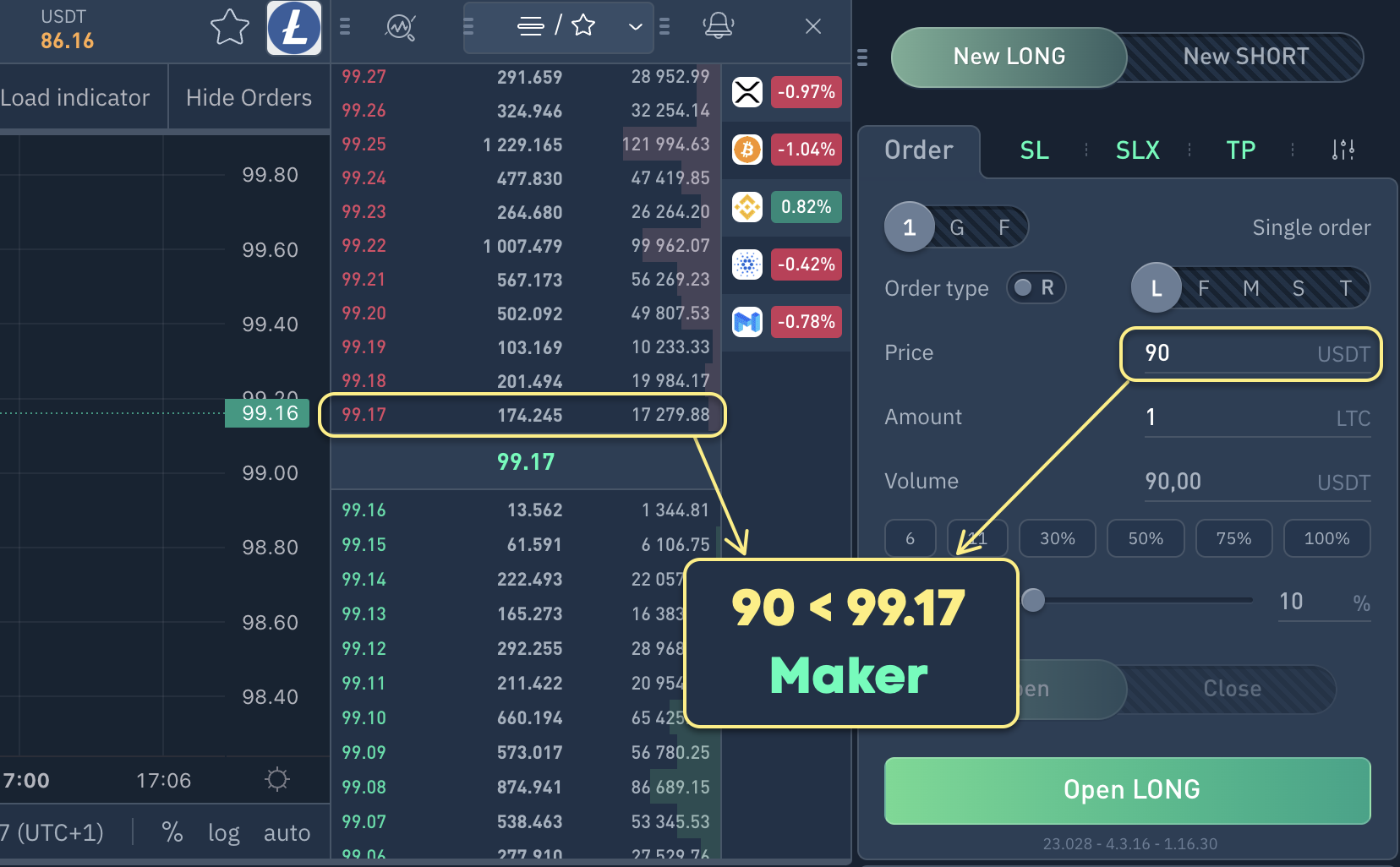
### Comisión de creador(maker) = 0,02%
Si se ha colocado una orden Límite en el libro de órdenes y se ejecuta algún tiempo después, se elimina la Comisión **Maker**.
Ejemplo de compra con una orden Limitada por debajo del precio de venta extremo
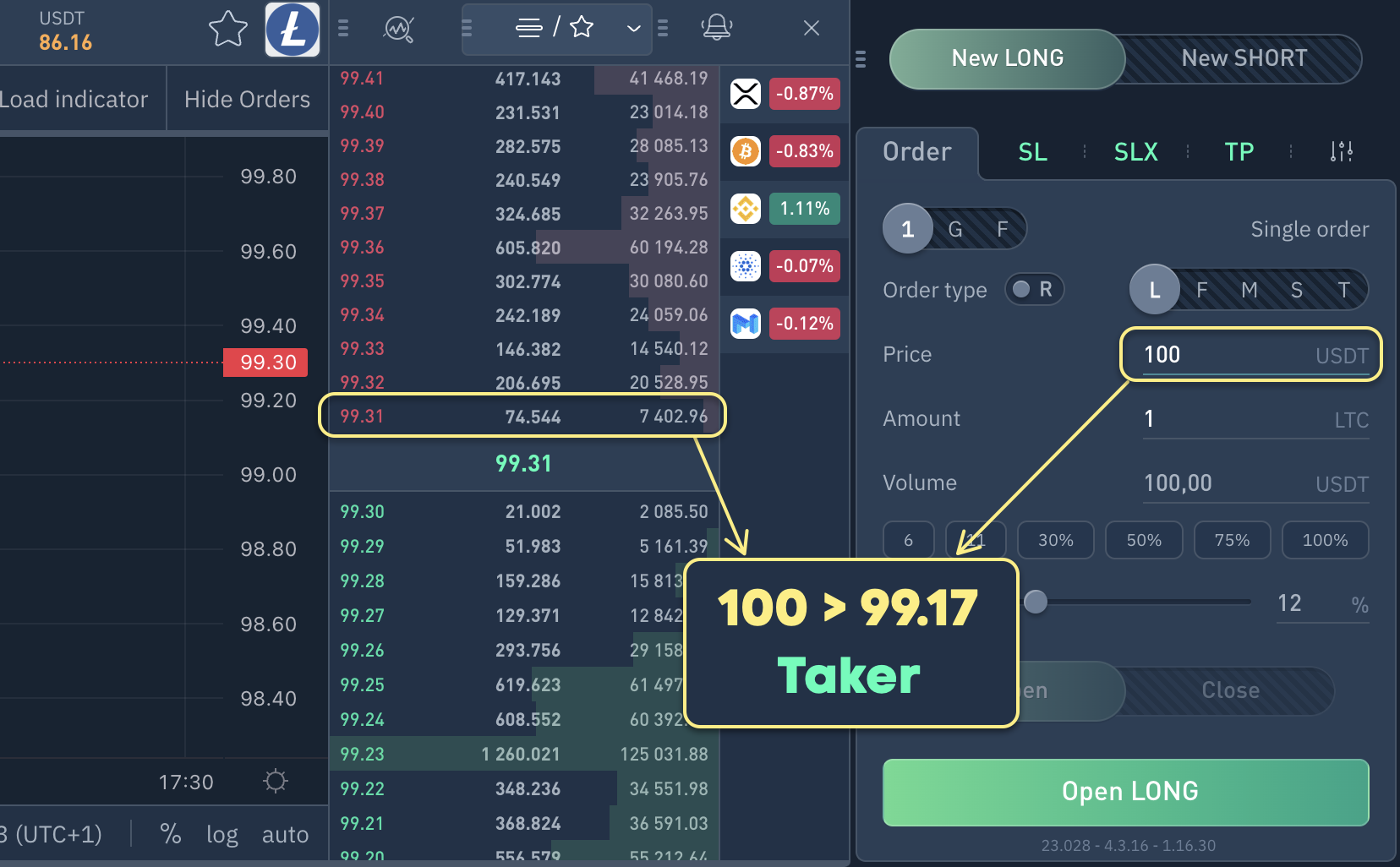
### Comisión de tomador (taker) = 0,05%
La comisión del taker se produce cuando se ejecutan las órdenes del libro de órdenes.
Ejemplos:
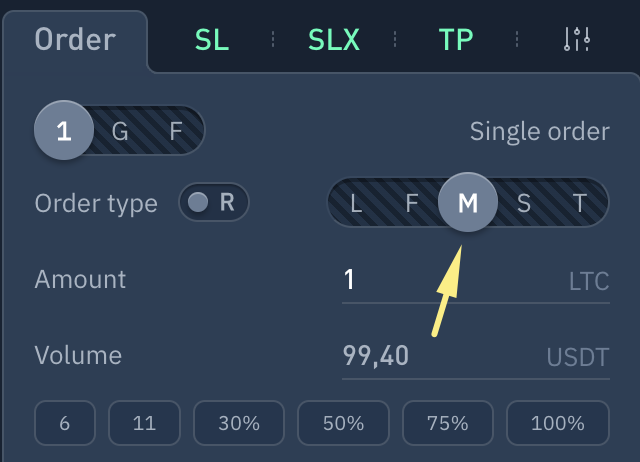
1. Orden de mercado
2\. Si una orden limit se coloca a un precio en la dirección opuesta, por ejemplo, cuando se compra a 100 en el libro de órdenes hay una orden de venta a ese precio, entonces la orden limit se ejecutará en el mercado y la comisión del **Taker** se cobrará por ello.
{% content-ref url="/pages/Ch64o8NnivE5j1nYlal6" %}
[Orden Limit](/es/trading/create-order-grid/order-types/limit-order.md)
{% endcontent-ref %}
{% content-ref url="/pages/tYJH75Bu29m8yKHGjl6a" %}
[Orden flotante (floating)](/es/trading/create-order-grid/order-types/floating-order.md)
{% endcontent-ref %}
{% content-ref url="/pages/dFSRVV2dN07ng6MUW3N8" %}
[Orden de mercado](/es/trading/create-order-grid/order-types/market-order.md)
{% endcontent-ref %}
{% content-ref url="/pages/sGnd385szRCajSsznrdl" %}
[Orden Stop](/es/trading/create-order-grid/order-types/stop-order.md)
{% endcontent-ref %}
{% content-ref url="/pages/60SSZBCzWpcDX2TdpUXO" %}
[Orden de arrastre (trailing)](/es/trading/create-order-grid/order-types/trailing-order.md)
{% endcontent-ref %}
{% content-ref url="/pages/VClyeW0jpF6f5wlyoiaG" %}
[Orden virtual](/es/trading/create-order-grid/order-types/virtual-order.md)
{% endcontent-ref %}